Loading...
Serving Victorville, CA and surrounding areas. (442) 219-3082
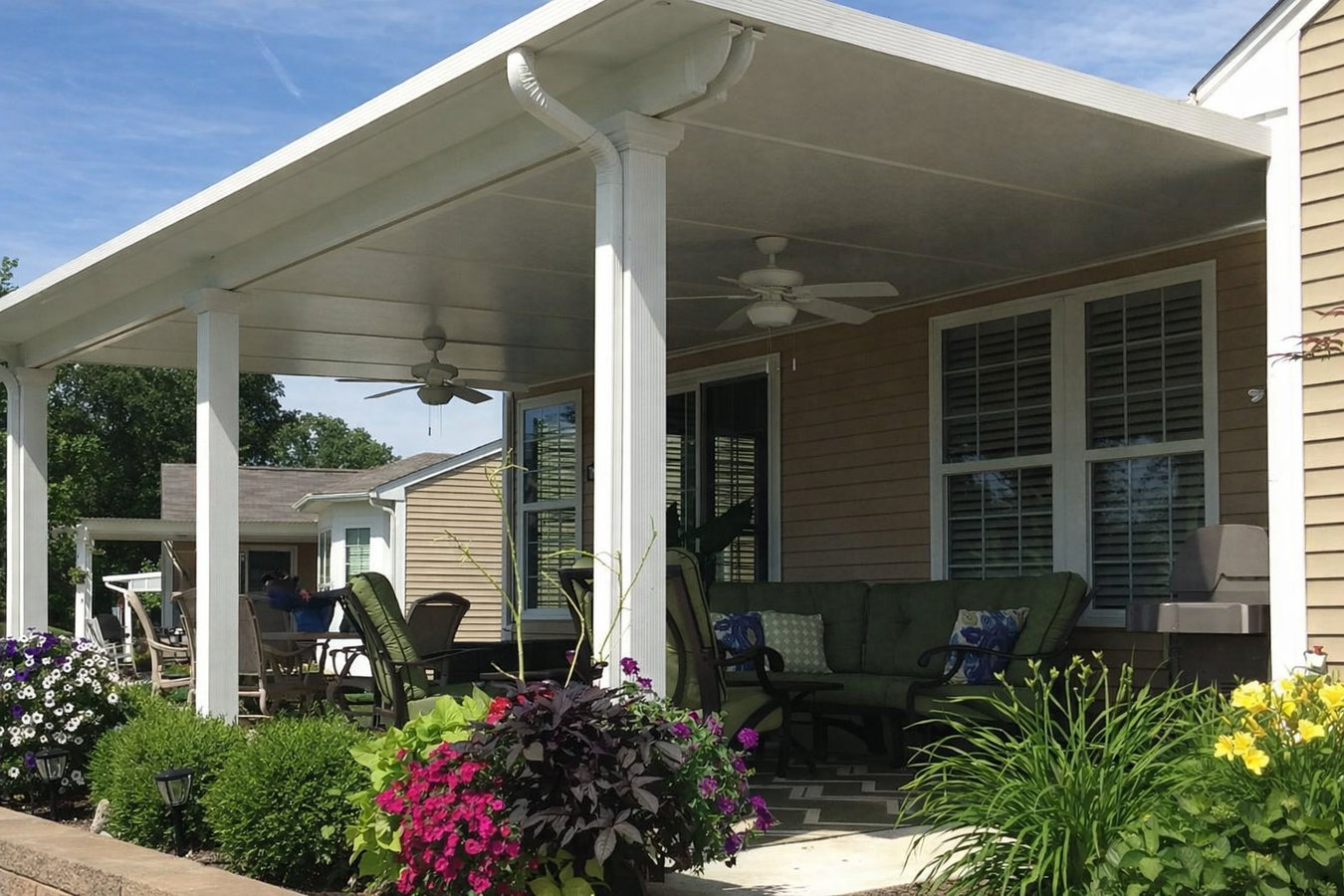
An uncovered patio in Victorville is off-limits for most of the year. We install patio covers anchored properly for High Desert wind loads, with material and permit choices that hold up long-term.
Patio cover installation in Victorville, CA means attaching a permanent roof-like structure to your home that shades your outdoor slab, with most projects taking one to three days of on-site construction once permits are approved and the full timeline from first call to final inspection typically running six to ten weeks.
A patio cover can be open-framed - like a pergola with gaps between the beams - or solid-roofed, blocking direct sun and light rain. In Victorville, where afternoon temperatures stay above 100 degrees for months at a time, a solid-roof cover makes a more noticeable difference than an open-frame design. The installation involves bolting a ledger board directly into your home's structural wall framing and setting posts in concrete footings deep enough to handle the area's wind loads. How those two connections are made determines whether the cover lasts or fails. If you want to go further and fully enclose the space with walls and glass, our patio enclosures service covers that step.
Every patio cover we install in Victorville is permitted through the City of Victorville Building and Safety Division. We file the application, manage plan review, and close out the permit after the final inspection - so your addition is fully documented and legal when it counts.
If you step outside in the afternoon during summer and immediately go back inside because of the heat, your outdoor space is not working for you. In Victorville, where temperatures can stay above 95 degrees well into the evening, an unshaded patio is essentially a room you cannot use for five months of the year. A solid cover drops the temperature underneath it and makes afternoon time outside genuinely comfortable rather than something to avoid.
If you have a concrete patio slab but nothing above it, you are leaving usable square footage on the table. Rain is rare in the High Desert, but when monsoon season arrives in late summer, an uncovered patio means wet furniture and nowhere dry to sit. A cover turns that existing slab into a true outdoor room that works year-round, not just on the handful of mild days in spring and fall.
If your patio furniture regularly tips over or your potted plants blow off during Victorville's seasonal wind events, a solid patio cover with properly anchored posts acts as a windbreak for the space directly beneath it. The Victor Valley sees gusts regularly reaching 50 mph or more during Santa Ana events - a covered area with posts on all sides changes the wind behavior at ground level significantly.
If you already have a patio cover but the frame is separating from the wall, the roof panels are warped, or the posts are leaning, the structure is failing. In Victorville's heat and wind, a compromised cover can become a safety issue quickly. The root cause is almost always a ledger board that was never anchored into the actual wall framing - just into the stucco surface - which cannot hold long-term under desert conditions.
We handle every phase from the site visit through the final inspection. That includes measuring your patio, reviewing wall framing access for the ledger connection, selecting material suited for your climate and budget, filing the City of Victorville permit application, and preparing HOA design review documents for homeowners in managed communities. Material choice is one of the most important decisions in a High Desert installation - the North American Deck and Railing Association publishes guidance on material performance across climate types, and aluminum consistently outperforms wood and vinyl in hot, arid environments for maintenance requirements and longevity. For homeowners who want to go beyond a cover and think through the full visual design of an outdoor addition before committing to materials, our sunroom design service can help you plan the space as a complete project.
Post footings in the Victor Valley require extra attention. The High Desert soil is often sandy, rocky, or interrupted by caliche - a hard chalky layer that forms naturally in arid soil and makes digging more difficult. Footings that are sized correctly for this soil type and for local wind loads are what keep the cover stable over years of seasonal wind events. We factor local soil conditions into every footing design, not a one-size-fits-all depth.
Best for homeowners who want maximum shade and low ongoing maintenance - powder-coated aluminum does not warp, crack, or fade under sustained desert heat and UV.
Suited for homeowners who prefer the look of spaced beams and partial shade - works well in combination with climbing plants or shade sails for homeowners who want more natural aesthetics.
For homeowners who want to use the space after dark or add airflow - electrical rough-in for fixtures and ceiling fans is far easier to include during installation than to add later.
For homeowners whose current cover is pulling away from the house, warping, or otherwise failing - we assess whether partial repair or full replacement makes more sense for the structure.
A patio cover installed to coastal California standards will not last in the Victor Valley. The combination of extreme summer heat, UV intensity at elevation, strong seasonal winds, and caliche-heavy desert soil creates conditions that stress both materials and connections in ways that most contractor pricing guides do not account for. Stucco-only ledger connections, shallow post footings, and vinyl or untreated wood materials are all common cost-cutting choices that show their weaknesses within a few years here. We have installed and replaced covers throughout the High Desert and understand exactly which shortcuts create problems - so we do not take them. We work across the broader desert region, from established neighborhoods in Fontana to newer subdivisions in Adelanto, and the same material and anchoring standards apply on every job regardless of project size.
Many Victorville homeowners also contend with HOA design review requirements before a city permit can even be submitted. The subdivisions built during the 2000s boom - particularly those in newer master-planned areas of the city - often have specific rules on cover color, material, and maximum height. We are familiar with this process, help prepare the submission package, and build the review window into the project schedule so it does not catch anyone off guard. Homeowners who have bought recently and never navigated an HOA exterior approval before tell us this guidance alone was worth the call.
We ask about your patio size, how you plan to use the space, and whether you have an HOA. You hear back within one business day. We then visit your home to measure, review your wall framing access, and give you a written quote that breaks out materials, labor, and permit fees separately - no vague totals.
If your neighborhood has an HOA, we prepare the design review package and submit it before applying for the city permit - not after. Permit review through the City of Victorville typically takes two to four weeks. We handle both processes in parallel where possible to keep the timeline moving.
Once the permit is approved, we schedule installation. Day one covers marking post locations, digging footings, and pouring concrete. Framing and roof panels typically go up on day two. The work zone is your backyard - keep pets and children out of the area during active work.
A city inspector verifies the finished structure matches the approved plans. We coordinate the appointment. Before we leave, we walk through the completed cover with you - checking level, attachment points, and any wall patching from the ledger installation - and haul away all debris.
Free site visit, no obligation. We measure your patio, review material options suited for the desert climate, and give you a written quote within a few days.
(442) 219-3082The most common reason patio covers fail in Victorville is a ledger board fastened only to the stucco surface rather than into the structural framing behind it. We locate and anchor into the actual wall framing on every project - which is what keeps the cover attached through years of High Desert wind events rather than pulling away from the house in the second or third year.
We recommend aluminum as the baseline for Victorville projects because it holds up under sustained desert heat, UV, and wind without the maintenance requirements of wood. We will build in any material you prefer, but we will also tell you honestly how each option performs in this climate - so you are making that choice with the full picture, not just what looks best in a showroom.
Victor Valley soil often includes caliche - a hard mineral layer that requires specific equipment and techniques to dig through correctly. Footings that are too shallow in this type of soil will shift over time, especially after heavy rain events that saturate and then dry the surrounding ground. We account for local soil conditions in every footing design, and we have the equipment to dig through caliche when it shows up. Learn more about soil assessment standards from the California Building Standards Commission.
Unpermitted patio covers are one of the most common issues that surface in Inland Empire real estate transactions. We pull every permit through the City of Victorville and handle HOA design review packages for homeowners in managed communities - so your cover is fully documented and ready to hand off to a future buyer without complications.
These specifics - anchoring method, material selection, footing depth, and permit compliance - are what separate a patio cover that lasts from one that causes headaches. Every project we complete is one we are comfortable putting our name on for years after installation day.
Start with a professional design consultation to plan your outdoor addition as a complete space before choosing materials or committing to a build.
Learn MoreTake the next step beyond a cover - enclose your patio with walls and windows to create a fully protected room you can use in any weather.
Learn MorePermit slots and contractor calendars fill up before summer - call now or submit your details and we will respond within one business day with options for your home.