
Loading...
Serving Victorville, CA and surrounding areas. (442) 219-3082
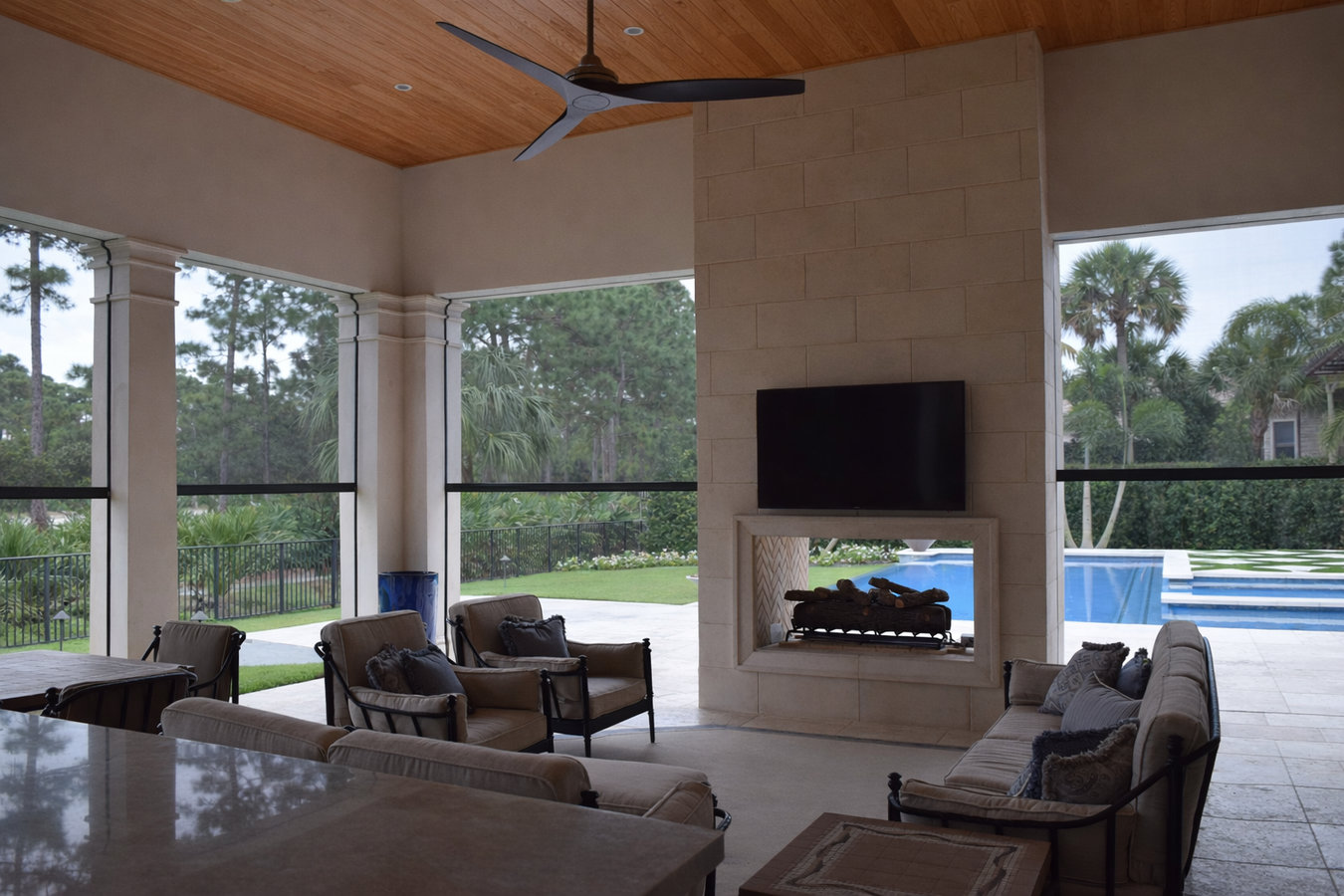
Victorville Sunrooms & Patios provides screen room installation, sunroom additions, and patio enclosures to Rialto homeowners across San Bernardino County, replying to every request within one business day. We know Rialto's postwar housing stock and the local permit process well.
Rialto backyards face Santa Ana wind-driven dust every fall, and a screened enclosure keeps that debris out of your outdoor living area without blocking the breeze. Our screen room installation service uses heavy-gauge aluminum frames built to withstand the gusts that move through the San Bernardino Valley each season.
Most Rialto homes from the 1960s through 1990s have an existing concrete patio slab in the backyard that is already at grade and ready to build from. Adding a sunroom over that existing slab avoids the cost of new foundation work and keeps the project on a tight timeline.
The flat lot layouts that are standard in Rialto make patio enclosures straightforward to permit and build - there are rarely grade changes or drainage redirects needed. A vinyl or aluminum enclosure adds a usable room without requiring the full framing and drywall of a traditional room addition.
Rialto winters are mild - overnight lows rarely stay below 40°F for more than a few days - which makes a three season sunroom a practical option for homeowners who mainly want to extend the outdoor living season without the added cost of full insulation and HVAC. It gives you a comfortable room for nine or ten months of the year.
Rialto's summer heat makes an uncovered patio unusable for most of the day during peak months. A solid aluminum or wood patio cover creates enough shade to cut surface temperatures by 20 to 30 degrees and makes the yard functional again from morning until evening.
Vinyl frames hold up well in the Inland Empire's UV-heavy climate without the fading and chalking that older aluminum finishes develop over years of direct sun exposure. For Rialto homeowners who want a low-maintenance structure that stays looking clean without annual painting or sealing, vinyl is often the right choice.
Rialto sits on a flat valley floor at roughly 1,200 feet in elevation, and most of its housing was built between the 1950s and 1990s during the Inland Empire's postwar growth period. Those homes are now 30 to 70 years old, which means the concrete slabs under existing patios have had decades to shift. The clay soils in much of San Bernardino County expand when wet and contract when dry, putting repeated stress on any concrete that was poured on grade. Before we attach a sunroom or screen room to an existing slab, we always check for uneven sections and cracking at the perimeter - a slab that has moved even a half-inch needs to be addressed before framing begins, or the addition will develop gaps and water problems within a few years.
The climate in Rialto also shapes which products work and which do not. Summer temperatures in the Inland Empire valley regularly reach 100°F or higher, and that level of UV exposure degrades certain glazing materials, screen meshes, and paint finishes far faster than they would in a coastal climate. We specify materials rated for this environment rather than standard residential products designed for milder conditions. The same heat and UV that shortens the lifespan of the wrong materials also means a well-designed sunroom or covered patio pays for itself quickly in reduced AC use - a shaded, enclosed rear space blocks a significant amount of solar gain from entering the home through the back wall and sliding doors.
Our crew works throughout Rialto regularly, and we understand the local conditions that affect sunroom contractor work here. The city follows a mostly grid street layout typical of postwar Inland Empire development, which means properties have predictable lot dimensions and the same basic slab-on-grade construction throughout. We handle permits through the City of Rialto Building and Safety Department and know the typical review timeline for residential additions in this municipality - usually two to three weeks from submittal to approval.
Rialto is bordered by Rancho Cucamonga to the west, where we also work regularly. The newer HOA communities in north Rialto near the 210 Freeway corridor have some of the same approval requirements we see in Rancho Cucamonga - specific stucco color matches, roofline coordination, and material approvals before construction can begin. We prepare HOA-ready drawings as part of every project in those areas so the first submission has the best chance of approval without revision requests.
Homes near Rialto Airport in the western part of the city tend to be older single-story ranch styles with smaller rear yards and original 1960s-era slabs. Those jobs often involve slab repair or partial re-pour before framing begins. We account for that in the estimate rather than flagging it as a surprise change order once work is underway.
We respond to every Rialto inquiry within one business day. A quick description of what you want to build and a photo of the backyard space is all we need to get the conversation started.
We come to your Rialto property, measure the existing slab or yard space, check for slab movement or cracking, and give you a written scope and price. The estimate is free, and we include any slab repair costs in the initial quote rather than adding them later.
We prepare permit drawings for the City of Rialto and, where applicable, HOA submission packages. Review typically takes two to three weeks for the city, and we schedule installation immediately after approval.
Screen room and patio enclosure installs in Rialto typically finish in two to four business days on-site. We coordinate the city inspection and walk you through the finished structure before we pack up and leave.
We serve Rialto homeowners throughout San Bernardino County. Free estimate, no obligation, and we handle permits with the City of Rialto Building and Safety Department.
(442) 219-3082Rialto covers about 22 square miles of flat valley floor in San Bernardino County, sitting at roughly 1,200 feet in elevation between Fontana to the west and San Bernardino to the east. The city was incorporated in 1911 and grew most rapidly during the postwar decades, leaving a housing stock that is largely single-family homes built between the 1950s and 1990s. These homes typically sit on lots of 6,000 to 8,000 square feet with concrete patios, two-car garages, and stucco exteriors - the standard Inland Empire tract home configuration. Landmarks like Rialto Airport (Miro Field) in the western part of the city and the Rialto Unified School District's network of more than 30 schools reflect how family-heavy and spread out the city's neighborhoods are.
The northern sections of Rialto near the 210 Freeway saw newer residential development in the 1990s and 2000s, bringing larger two-story homes, tile roofs, and HOA communities that look more like Rancho Cucamonga than older Rialto neighborhoods closer to the I-10. That split means homeowners in different parts of Rialto have different needs - the older south-end homes often need slab work before any addition can begin, while the newer north-end homes need HOA coordination before framing starts. We handle both situations routinely and factor the local specifics into every estimate from the start.
Keep bugs out and fresh air in with a professionally installed screen room.
Learn MoreTurn your deck into a weatherproof sunroom you can enjoy all year.
Learn MoreGlass solarium installations that maximize natural light in your home.
Learn MoreDurable patio covers that protect your outdoor space from sun and rain.
Learn MoreCall now or submit a free estimate request - we respond within one business day and can have someone at your Rialto property within the week.